

In February 2006, Steve Jobs took the stage at Apple and announced that the company was about to reinvent the home stereo.
During his presentation, he talked about the iPod. By 2006, iPods were a huge business. Apple was making $8 billion a year on the devices, and it was selling millions a quarter. This meant they were everywhere. People were carrying them on the train. The ubiquitous white earbuds were visible in bank lines and on city streets. We were connecting them to our cars and stashing them in our pockets. Apple also allowed for a constellation of hardware makers to build docks for the iPod. And Steve Jobs didn’t like that so well.
He wanted something better. He wanted to show the world something new.
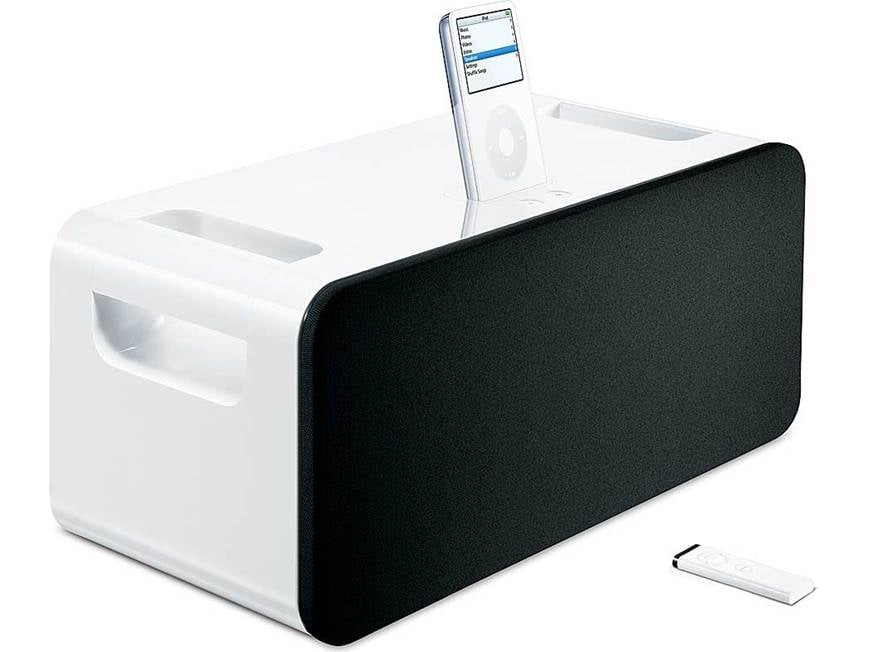
What he gave us was a large white box with an iPod sticking out of the top.
What he gave us was the iPod Hi-Fi.
The iPod Hi-Fi was Apple’s attempt to take the iPod out of your pocket and make it the center of your living room. Apple called it a “high-fidelity speaker system,” and Jobs said it offered “true high-fidelity sound quality” from a single enclosure. At $349, Apple was not treating it like another little iPod dock. This was supposed to replace a stereo.
It was also, in several ways, a very good product.
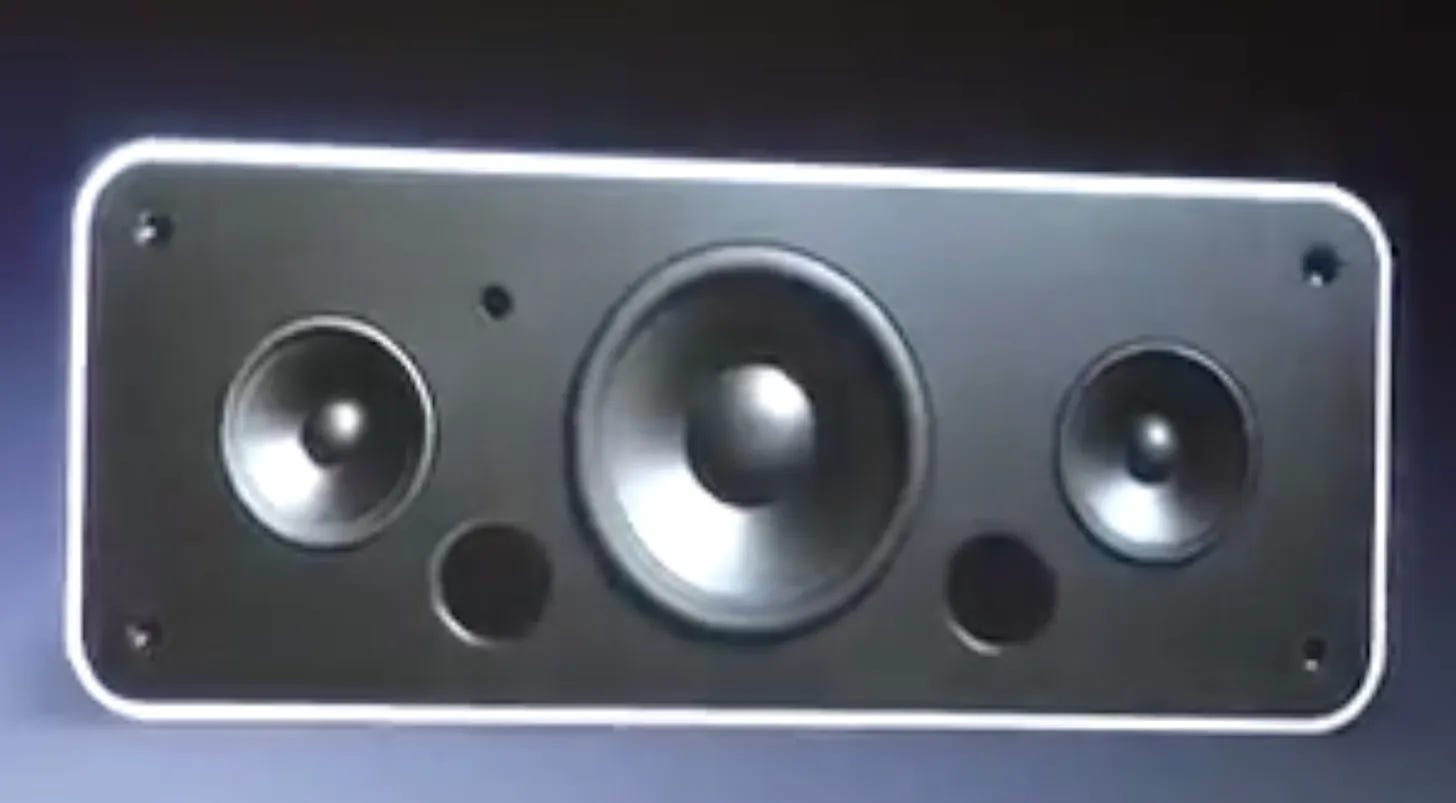
Inside the 17-inch-wide enclosure were two 80mm wide-range drivers and a 130mm woofer. There was an integrated 30-pin iPod dock, an Apple Remote, touch-sensitive volume controls, and an auxiliary input that accepted both analog and optical digital audio. It charged your iPod, and you could even load the Hi-Fi with six D-cell batteries and carry the whole thing somewhere like a sexy, sleek boombox.
The design was pure mid-2000s Apple. It was made of white plastic with a black removable grille, almost no visible controls, and very little setup. There wasn’t even a power brick hanging behind it because Apple built the power supply into the enclosure.
And contrary to the reputation it later acquired, the iPod Hi-Fi actually sounded pretty good.
Ars Technica tested it against the Altec Lansing inMotion iM7 and Klipsch iFi, two serious competitors of the period. The reviewer came away surprised by the Apple system, writing that it produced a full sound, managed respectable stereo separation for a single-box system, and measured with the flattest frequency response of the three systems tested. There were complaints about somewhat muddy vocals and uneven bass in certain situations, but the basic verdict was clear: this thing could play music.
The one thing that happened during this time was the hemming and hawing by reviewers. People who got the Hi-Fi to test loved it. They could easily ignore the $350 price tag and the device looked decidedly futuristic. Just look at ti compared to the wonky, Wired-circa-1998 aesthetic of the Xbox.